Media Research – Assange

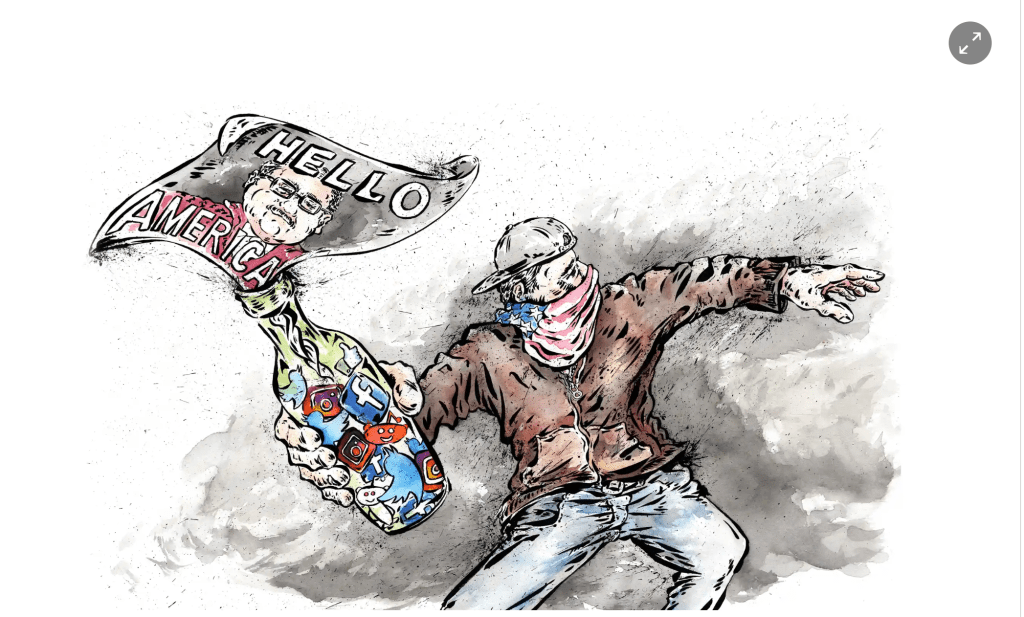
I was examining El Pais in regards to the Julian Assange case and his founding of Wikileaks. This source, alike many others, does not portray a more in-depth explanation of the situation. It is very tough to make that argument in a seemingly black and white case. I wouldn’t even go as far as to say it is a two sided story as almost all of the information is against Julian Assange. El Pais suggests that Assange’s following and social support is not nearly what it once was a few years back. This article in particular goes into depth of the court case against Assange and highlighted certain facts from the lawyers such as the prosecutor speaking about his leaked information reaching terrorist organizations. There is a very clear bias for the United States government, as there is no discussion of the lawyers supporting Assange, and all in favor of those opposing him. It began to go into background of his alleged sexual assault charges, but never goes more into depth than to suggest that he was accused. The framing done by this author strongly suggests a bias against Assange, as there is little to no supporting info in his favor. There is a brief area in this article which speaks of those who have stuck by his side, and it only mentions him asking them not trying to scream during his trial.

El Pais has a few other articles that have a bit of diverse views, but the overwhelming majority of the information coming from this source is similar in the support of the United States government rather than to support Julian Assange.

While this is interesting in its own, it brings on a greater debate of the media and their representation of free speech. The media, at least as I have discovered in this case, has not rushed to support Julian Assange. Their position is purely that he has violated the law of the United States and even said, “They did not care whether or not a violation of rights occurred. They did not care about everything. They only cared that it was clear that US law had been ignored. The problem is that someone who is neither American nor was accused the direct source of the leak.” This shows the essence of the problem. The world, and the media as a whole is more concerned with the law rather than the protection and human rights of the people of whom they are supposed to protect. Nowhere in this article does it mention the rights of the people of the United States, nor other countries in which sensitive data was leaked. Instead, it is only concerned with covering its own back and and protecting the information of the government.

After this information and my newfound research, I have taken a personal position. I believe that Assange is, in fact, guilty, and should be treated as such. Regardless of the rights of the people or free speech, Julian Assange has directly compromised the national security of the United States. There is an overarching need for security of the whole before individual rights of the many. While I am a firm believer in individual rights, I do not think that they should override the security of our nation or the protection of its people. This is very similar to the debate of cybersecurity, privacy versus security. I similarly stand in the position of security, as I think that the whole should matter more than the individual.

As we look forward from this event, I believe that it has strongly discouraged the concept of revolutionary free speech. After this extreme reaction towards Julian Assange, this clearly shows the position of the United States government in opposition to free speech. While they are not directly opposing free speech, they are opposed to the theory of releasing information that they do not think is acceptable. It was quite interesting to see the reactions of the government and the extreme actions they are looking to take on an individual who is not even a citizen of their country. Moving forward from this, I believe that people will be much more cautious before undergoing an action like this due to the extreme punishment Julian Assange is now facing.

Miguel, Rafa de. “La Acusación Contra Assange Insiste En Que Wikileaks Puso En Peligro La Vida De Informantes.” EL PAÍS. Ediciones EL PAÍS S.L., February 24, 2020. https://elpais.com/internacional/2020/02/24/actualidad/1582525867_786691.html.

Memes

Image result for hillary memes
Image result for political memes

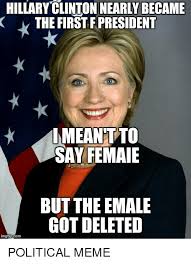
Memes have become the glue that holds Instagram and Twitter together. Memes allow user creation, user consumption and allow the public to share their mind for the world to see. While user generated content is great for the freedom of speech and expression, it does have its flaws. Political memes, while they provide humor and information to the uninformed public, they also provide potentially inaccurate information to those who don’t know better. As stated in The Guardian, “the power of mass replication has poisoned the US election.” This has been seen more than ever with the relatively high disproval of all major political candidates and current internet climate of virality. With 2016 being the most memed election to date, and the further increase in internet activity since that time, it can only be imagined what will happen as this November’s election comes closer. Political discussion is a good thing, as it allows all opinions to be heard and considered, but in scenarios like this, the information that is being portrayed to the public is far from the best truth. As can be seen by the above memes, political memes often target a negative aspect of the candidate in attempt to dissuade the less informed public from casting their vote in favor of the memed candidate. This is a toxic environment where younger generations are acquiring political information from sources whom have an ulterior motive, and has frankly furthered the divide between the right and left. With highly hyper-criminalized candidates on both sides, it generates a love-hate attitude for candidates and makes moderation very difficult to achieve.

https://www.theguardian.com/us-news/2016/nov/04/political-memes-2016-election-hillary-clinton-donald-trump

The aforementioned Guardian article goes on to show examples of these flawed political memes, such as Trump’s Taco Bowl, or Ted Cruz being unmasked as the Zodiac Killer. People make memes of these politicians in hopes to find them at their worst. This helps to propagate information to further their own agendas. This has been seen time and time again over the past few years in left wing slander towards President Donald Trump. With today’s age being more technologically active than ever before, it is very easy for uninformed citizens to find their information through political memes on Twitter and form opinions based on a biased political joke rather than fact. I have personally spoken to an elementary school about this topic, for a global politics class at my home University. It is very interesting, but not shocking, to hear that most of the children only knew things about the political candidates that they had seen online, whether that be President Trump’s hair being fake, and Hillary Clinton being in prison.

While this is a common issue among elections and political activism and slander, this also has become a major issue among international conflicts and even nuclear races. According to the New York times, this has become a major issue in the weaponization of tweets and international threats.

This articles includes the example of the recent Indian-Pakistani tensions, and the role of social media and memes in this feud. With tempers at an all time high, and an escalation of aggression, civilians attempt to break the ice by firing humorous slander towards the other nation. While in theory, this is a good way to cool down the tension, the article suggests that the memes rather riled up the opposing side and further heated the conflict. An example that hits closer to home for myself personally is the heightened nuclear race between the United States and North Korea. This was largely publicized and visible via Twitter, as memes were flying off between both sides. The New York times takes this opportunity to target a deeper political discourse of these memes, essentially calling them a coping mechanism. The author suggests that Gen Z has grown up in a political climate where humor is used as a coping mechanism for fear. This is often seen with the United States and Iran, as tensions of a war have been climbing in recent months. From this conflict has given rise to thousands of memes about World War III on apps such as Twitter, Instagram and Tik Tok.

The above Tweet by @haseebasif is just one of many examples of this comedic relief to alleviate the fear of imminent war conditions. It is clear that the current political climate is one that is the most active on social media that the world has ever seen, and is very strongly swayed by information found on social media apps. This WWIII meme has been at the forefront of social media over the last months, and further confirms the New York Times theory of the coping mechanism.

Overall, we live in a world today where most of the population is always plugged in to a smartphone. With that being said, this provides the opportunity and risk for the public to get the wrong source of information if they don’t know better.

Here is my meme 🙂

The Memories of September 11, 2001

Interview of my Dad, Robert (age 60):

At the time of the attacks, my family lived in New Jersey, and my dad and myself were actually in the city on this day. We were at a dentist appointment that morning, and initially saw the news of the attacks on television news. My dad spoke of his memory of the facial expressions of the other people in the office as the shock of the tragedy reached the crowd. As I asked him more about what specifically he remembers, he spoke mainly of the facial expressions of others in the office, and the way he could feel the collective heart of the room drop. After the initial shock hit, he turned his focus to the fear that we were in danger. As time went on, more and more people could be seen outside in the streets as everyone began to be afraid, and rumored that inside was less safe than outside. He said that these events affected his world view in a huge way. Following this day, he spoke of how the media shared a major anti-muslim sentiment, and that it rubbed off on himself and the public. He was ashamed to say that for a while it made him afraid of those who looked like the attackers, and founded a patriotic dislike for the middle east. I asked whether he remembered media prior to this day, and how it changed afterwards, and he said the talk of terror and the coverage of tragedy skyrocketed. As the news companies saw the reaction from the public, my dad felt like the reporters started to focus on these topics to generate better engagement.

Following this interview, I began to think how this affected my own views, or the fact that I actually shared this experience. The major issue was that I was only two years old at the time, and although I was also in the city at the time of the attacks, I have absolutely no recollection of the events. I do not believe that this has changed my view of the event, as I grew up in a generation that was very informed of the events of 9/11. I had developed my own views aside from the bias of older generations, and I do not feel as though hearing another view has changed how I feel. It was pretty crazy to hear that I was there at the time of this event, I just wish that I was able to remember how I felt in the time, so I could have a more informed opinion.

Interview of my brother, Hudson (age 11):

This interview was very different from my previous interview with my father. Speaking to someone who was not yet alive when this occurred, he was not fortunate enough to develop his own opinion. I went into this interview with movie we viewed in class as an expectation, but my brother was surprisingly informed on the subject. A few years back, we brought him to the monument and 9/11 memorial museum. He spent hours asking questions, exploring the museum and reading everything he could get his hands on to better understand. He told me that they had been taught about this in class, but there was only so much an elementary schooler can really absorb about such a complicated subject. He knew the responsible organization, a few names of key individuals, and the gist of how the attacks went down. What he failed to understand however, were the feelings of the public following these attacks. He reminded me of a vacation we went on a few years back, where he was crying on an airplane, as he was afraid when men he said “looked like terrorists” walked by him on the way to their seats. While this is hard to explain to him, he reminded me that this feeling comes from only what he has seen online or read about. My family sat with him to explain that this was not an issue anymore and that he should not be afraid. His world view is only shaped by the things he has seen and read, as he was not part of the generation who grew up with this as a commonly spoken topic. It is completely different than my world view, understandably as I have been around ten additional years. I was very fascinated, however, with how this view could be changed through more discussion and education. I feel as though it should be more widely discussed rather than just one day a year when it is on the news.

After speaking with my brother, I began to think about the difference in generational knowledge of the attacks between my brother, myself and my parents. It was very fascinating to think about the experience as an adult from my dad, growing up through it for myself, and then hearing only in retrospect for my brother. None of the views or experiences we have are the same, yet we are all fed the same information year after year on September the 11th. My dad was an adult who remembers the attacks vividly in his adult life, experiencing the attacks first hand and gaining media exposure to enhance his opinions. He lived most of his life before this event, and has seen the follow up and aftermath of these attacks on the world today. My views were different in the sense that I was too young to experience this event. My experience was growing up in a generation where terror and increased security measures defined international travel, and I have never really known much difference. My younger brother only has experience from the time in which the effects of this tragedy are still relevant, but fading in the forefronts of the minds of the American public, and only gathers what he can read or be told on his own.

Interview of my high school science teacher Mr. Herlihy (age 38):

This interview was very unique, and was nothing similar to that of those with my family members. My teacher Mr. H was a sophomore in college in California at the time of these attacks. He remembers this occurring during his move in week, where everyone was busy settling in. He said that the dissemination of this information was very slow, as this was still before common media outlets were mobile. He said that once the news reached his campus, move in quickly stopped and all of the students convened to a public with radio and television. He said that this was an interesting age to be during the attacks, as these are the major years for young adults to be forming their own world view, as they are living on their own for some of the first times. He said that they all felt terror, being close to San Francisco and unsure of the nature of the attacks, if they could be next. As the panic set in, he remembered watching people running around frantically trying to access phones to call their parents or loved ones. His world view was permanently changed, as he says he was afraid to fly for years following the attacks. This event struck fear into he and his friends, and he remembers the news only making him more scared. After the attacks, terror was the main topic of media coverage, and there was a common anti-muslim bias present. He was in an interesting position, as he had only been alive 19 years prior to the attacks, and had not fully had time to develop his own world view before this. After the attacks, he says that he and all of the students around him couldn’t help but take this bias that was covered from New York City.

I would say that I could relate the most to this interview. Coming from another person who did not have a direct memory of the event, and more or less heard from media, both of our world views and opinions have been shaped by the experiences and biases of other people. While his world view had been more mature than mine at the time of the attacks, he and I both were largely shaken by this tragedy, and did not know enough of the world first to know how rare this would be. Alike my teacher, I would agree that my generation in general has a fear or implicit bias against Islam, and is something that only time can correct. With the given political climate and public turmoil in the Middle East during our lifetimes, it is very hard to change this sentiment. This was a unique perspective that I would like to further explore in future conversations.

As I was able to see in completing these interviews, the age and world view the interviewee had prior to knowledge of the 9/11 attacks went a long way towards their personal bias. These stories together are important towards building a collective memory. A memory that includes perspectives from all types of people with all types of knowledge. No two individuals will have the same world view, and that is the beauty of a collective memory. Where one person leaves off another is able to pick up. Knowledge my brother may not have had, I can share with him, and likewise with those older than myself. This exercise has changed or rather educated my memory more than I had previously. By getting to learn other perspectives, I was able to understand more of how the world is viewed by others, and how other people were affected by the attacks of September 11th, 2001. 

My Digital Biography

February 2003: Gameboy Advance SP

Image result for gameboy advance sp release date

This was the first example of my digital interaction. When I was 4, I received the first gameboy on my birthday. This allowed players to play games individually and did not offer any system to play with other players. My parents bought me this, and often kept me busy during dinners or on trips. I used it to stay occupied when my parents wanted me to, or for trips on airplanes or when in the car. This was my first exposure to technology and was very fun and kept me occupied for hours on end during vacations and times without something to do.

June 2006: LG Migo

Image result for verizon migo release date

This was the first time that I personally was able to communicate with other people. This phone allowed me to call four numbers, in addition to an emergency number. This was the basis for more advanced phones to come later on, and was the first example of my social interactions with others beyond the length of my home. This was purchased by my mother to keep me safe while at school, and to be able to get ahold of them during emergency situations. This felt like the coolest thing ever to have a phone, and it was a huge popularity stint to have one of these.

February 2009: Motorola Razr

Image result for original verizon razr release date

This was the first mobile phone I had that gave access to the internet. The browser was very slow, and was very expensive to use cellular data, but gave me the first freedom to access the web via mobile device. In addition, I was able to call any number and text any number (with very lofty priced messaging). My parents wanted me to have this phone as a lot of my friends began to get cell phones, and they wanted me to be able to communicate with all of my friends, and to stay in the popular trends. I loved this phone, and had it for a good number of years before moving to a smart phone.

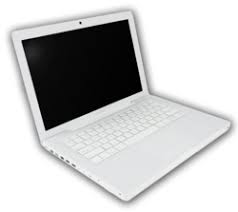
September 2010: The Original Macbook

Image result for original macbook

This was the computer that I had for the beginning of my middle school career. This was the first time I had free, unrestricted access to the internet. This allowed me to communicate with anyone, at any time, and for any duration on wifi. This gave birth to an era of online communication via multiple instant messaging apps and the start of social media applications. My parents bought me this for school, and were not originally very happy about the fact that I was able to talk to people without their knowledge. They were given no choice however, as the school required me to have a computer to be able to write. My experience with this computer was outstanding, as it was the first time I was fully free and given the chance to explore the web on my own.

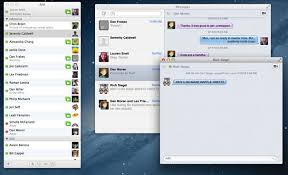
September 2010: iChat

Image result for ichat

This app was one of the most widely used in my childhood years. In middle school, all of my friends would sit on iChat for hours at night after homework. It allowed me to stay connected to my friends after school, to see status updates, and to stay in the loop. I used them to communicate with friends and childhood girlfriends beyond school hours. All you needed was a wifi device by apple, so almost all of us were on this app. My friends told me about this, and I joined once I got a MacBook. My parents knew of the app, but did not like that I was able to communicate unmoderated with anyone online.

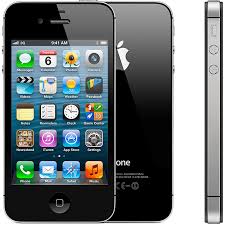
February 2012: The iPhone

Image result for iphone 4s release

The iPhone was revolutionary for social interactions, and was the first time I had unlimited access to the internet, and to all social interactions. This was my chance to be able to have access to the internet in its full capacity, from anywhere. This device allowed texts, calls, access the internet, downloading applications, and staying connected from anywhere that had cellular service. I used it primarily to text and play games at this point, as social media had not yet become a huge thing. My friends encouraged me to buy this, as it was the ‘next big thing’ to have. My parents supported this, as I was more able to stay in contact with both them and my friends. This device had a lot more to offer than anything else that had come before it, and was instrumental towards the society and digital culture in which we live today.

September 2014: Instagram

Image result for instagram

Instagram was my first form of social media. This began my freshman year of high school as everyone began to make accounts. This was huge towards my staying up to date on popular culture. This app allowed users to share pictures and comments, to engage other users posts and stay in the know with celebrity and popular news. I mainly used this app to share personal posts and see what my friends were up to. My friends got on this app before I did, and encouraged me to use it to keep others up to date that I did not see on a regular basis. My parents knew I had the app, and followed my account so they could also stay up to date on the things that I was posting online. This app has probably been the largest influence of digital climate of any app I have experienced in my life, as it seems to be the basis of all popular culture.

September 2014: Snapchat

Image result for snapchat release date

This social media app has become one of the main platforms for communication between most of our generation. This app allows people to communicate in a private setting, to post stories of pictures and videos for other users to view, and more recently to stay updated on popular culture. I mainly used, and still use this app to communicate with my friends, and use this app multiple times per day. Every single friend of mine is on this app, and I was one of the last to get on this platform. They all talk on it, and for that reason I too joined the app. My parents did not like this app when I was younger because messages could disappear without being able to be recovered, and for this reason was often used by kids to text things that they did not want their parents to see.

September 2016: The iPad

Image result for ipad

The iPad was a huge device for me during high school and still today during college. My high school went ‘paper-free’ my senior year and required all students to use iPads for tests, notes and quizzes. In addition to school uses, it was able to text, listen to music, download apps, text, email, access social media and much more. I primarily used my iPad while at school for school purposes, but would also text my friends and play games during school hours. My school was responsible for me accessing this device, as it became a requirement for all students. My parents knew about this because I needed it for school. In retrospect this was probably not the best idea to give a bunch of kids unrestricted access to the internet during school and expect them to be responsible.

February 2017: Spotify

Image result for spotify

Spotify quickly became one of the most important apps in my life. Music has been a huge part of my growing up, and I am constantly listening to music. When I made the switch from a fading iTunes, Spotify allowed collaboration between users to build music taste, and share new and rising artists. You were able to view what friends were listening to, follow artists to hear their new releases and view top charts of your country and the world to see what others were listening to. My dad encouraged me to use this app, as he enjoyed music as well and liked the fact it made listening to music a social activity. I used this app to create and develop different playlists and stay up to date on new releases and popular music around the country in all of my different favorite genres.

May 2017: Playstation 4

Image result for playstation 4

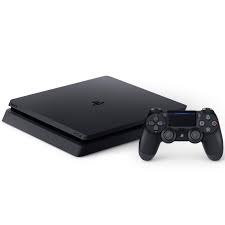
I was never huge on video games growing up, but once I graduated from high school I started to get more into video games. This console allowed you to play games with friends and other users all across the world, and to chat with your friends while playing. I used this console to play sports video games with my friends, and to chat with them online while playing. Many of my friends grew up playing games like this, and I played while at friends houses, but they encouraged me to get my own once we graduated from high school so that we could all play together in college. My parents were aware that I got this, as they bought it for me when I graduated so that I could still play with my friends and stay in contact with them outside of texting or social media.

December 2019: iPhone 11

Image result for iphone 11

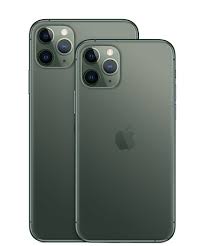
This is my current personal device. Clearly, as can be seen by the picture, the technology has come a long way since the first iPhone I had years ago. This phone allowed even faster service, a more powerful processing system and better apps and games. I use this to surf the web, use apps such as snapchat, Instagram, twitter and other social media. I also play games when I am bored or on flights, text and call my friends, and use it to stay in the loop while in Spain. It allows me to communicate with my parents and friends and family. My parents got me this for Christmas this last year, and I feel as though I was ‘invited’ to this product by social norms, and riding popular trends.

Today:

Today I own 5 personal devices. Technology has become an ever increasingly important part of life, especially for my generation, and it is important to stay with the times. I have upwards of 25 profiles online, as almost every service I use requires an account to be made. From Vueling for flights, to social media such as Instagram or Snapchat, to clothing websites, accounts have become more and more common to save settings and order history etc. I am constantly on my phone, as I am in contact with people for work, my friends and family almost the entire time I am awake. I would say outside of class I check every 10 minutes. Thanks to an app on the iPhone, I can say that my screen time average was last week was exactly 8 hours and 26 minutes.

Future Wishes:

As I look forward, the first thing that very obviously needs to change is my screen time. It terrifies me to know that I spend over a third of the day on my phone, and a majority of my waking hours on a screen. I aim to have more personal interactions, and spend less time looking at a screen. Additionally, I would like to be more conscious of terms and conditions, and the things I agree to sign over when I join a new app or service. I am still very uncomfortable with the fact that I have no idea what exactly I have agreed to, or who has my information online.
About me

Hi my name is Auston Locke and I am a pre-med student from UC Berkeley. I am from Orange County CA, and am interested in sports, music and surfing.

I had a bit of a tough time adjusting to life outside of the states, but have come to enjoy it very much in the time that I have been here. I am very excited to continue to learn and travel the world.

Journalism against ambivalent narratives & compassion fatigue

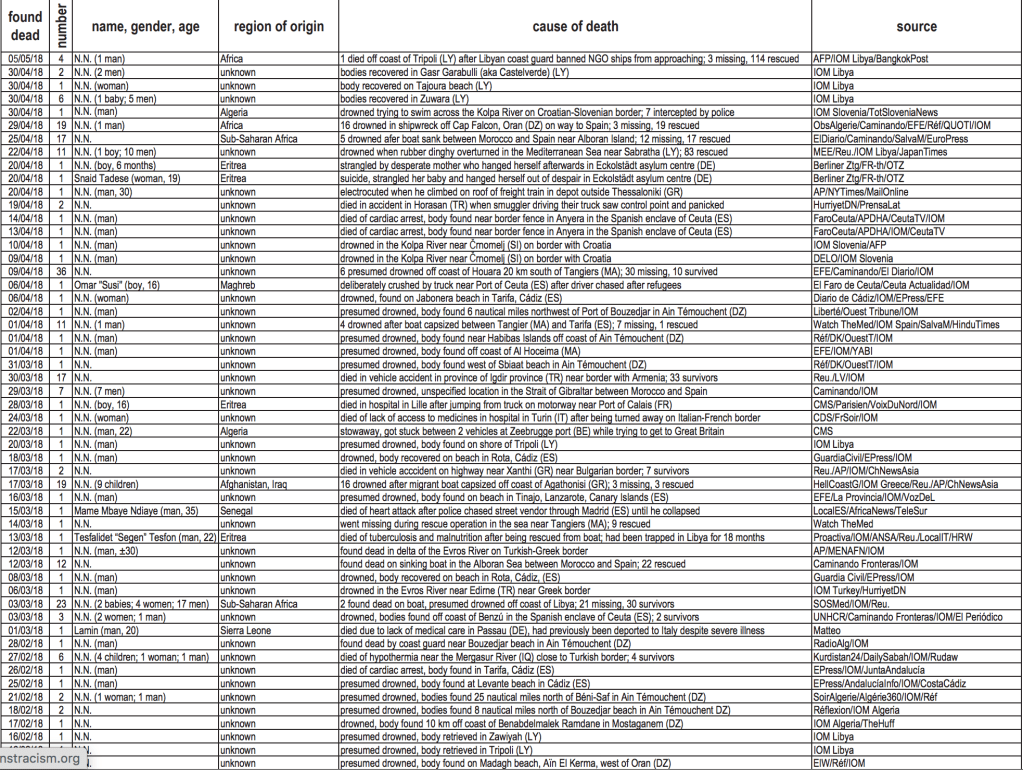
The mere shock value of scrolling through “The List” speaks volumes to the issue of the European Refugee Crisis. Purely counting those accounted for by UNITED against racism, there have been 34,361 deaths linked to this tragedy. This number, in comparison to an event such as the 2,977 lives lost by the 9/11 Attacks, is an absolute atrocity that sits alike numbers of genocides of entire races.

This is merely one of 56 pages of reported deaths by this terrible crisis. At first glance, and without proper knowledge, this can be grossly misinterpreted and attributed to all of Europe. However, after further research and examination of the text and outside sources, it becomes more and more evident that a drastic amount of this issue stems back to the escalation of violence between Syria and Turkey. Euronews states that Turkey is currently hosting 5 million refugees, and 3.7 million of those are Syrian. Turkey states that they can no longer host this number of refugees, and are attempting to distribute through the rest of Europe and back through Syrias border. The major issue of this is that the border is held by Syrian jihadist groups, and these groups have racked up many of the casualties of those both attempting to escape and those being forced to return to Syria’s North. This all being said, while the list above is a very informative and very useful piece of information, it does not adequately express the information of this crisis. While this is a major issue as can be seen be the ever climbing death toll, there are two sides to every story. What this list fails to account for is the millions of refugees fleeing across the Mediterranean Sea, across international borders, or even intercontinental borders and the lack of available space and resources by the European Union to support this influx. While all of this provides issues of their own, this doesn’t even begin to mention the lack of screening and security caused by this lackadaisical processing deal.

https://www.euronews.com/2019/12/23/turkey-warns-europe-of-new-refugee-crisis-as-syrian-forces-attack-idlib

According to The Guardian, this refugee crisis showed the world the ‘worst’ side of Europe. “Instead of open arms, those who survived the Mediterranean crossing were met with racism, fear and incarceration”

Migrants aboard a dinghy off the Libyan coast, June 2018.

https://www.theguardian.com/commentisfree/2020/jan/01/refugee-crisis-europe-mediterranean-racism-incarceration

This was a huge shock to the world, given a system such as the EU was founded on its open arms, refugees were instead dropped into a system that simply did not want them. Where eurocentrism had previously been instrumental towards the positive economic and social growth of the European Union, it had now caused a PR nightmare for the ages, and in turn sacrificed the lives of many innocent refugees seeking asylum. This is the perfect example of ambivalent narratives, this crisis being very similar to that of the immigration crisis the United States is currently facing. There are two very strong and very opposed opinions on the matter. Many state that this issue should be handled in a more human fashion than it has thus far, and furthermore that the EU should hold open arms to those seeking asylum. While this is a very popular opinion, there are also those who are strongly opposed to the matter.

According to BBC, this system has been particularly unfair to Italy and Greece, who have borne the overwhelming blunt of the impact of immigration. BBC states that Greece alone received 791 refugees just this Tuesday. On the record, Greece and Italy aim to display their global compassion discourse, but implore the other countries of the European Union to aid them in the proper redistribution of these refugees so that all may seek asylum.

https://www.bbc.com/news/world-europe-49752380

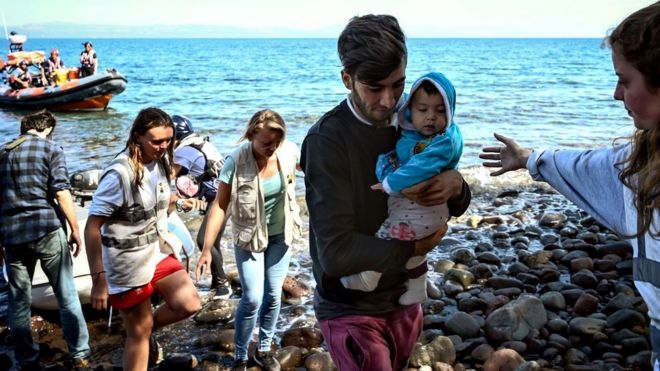
Migrants are helped by rescuers as they arrive on the Greek island of Lesbos after crossing the Aegean Sea from Turkey, 16 September 2019

This crisis has, in my opinion, not been adequately processed and written about in today’s media. I have discovered many conflicting articles, very ambivalent sources, from across cultures and media sources. This is an example of where journalism cannot be consistent, and where bias will inherently shine through. This event is also the perfect example of compassion fatigue. Initially, the European Union was more than willing to take in refugees and provide asylum to those in need. The difficult thing about this however, is that once it rains, it pours. What began with numbers in the mere hundreds, and accordingly, housing these few refugees was very manageable for coastal nations such as France, Greece and Italy has turned vial for the entirety of the EU. There are now other European nations such as Turkey who have been forced to provide asylum to 5 Million refugees. Yes, 5 million. When a simple problem becomes a crisis for the entirety of the European Union, it suddenly becomes very easy to forget about the compassion and willingness they once shared for the refugees, and find that those positive feelings very quickly can become resent and even hate.

After all has been said, I would be foolish not to recognize firstly the severity of the issue, and secondly the emotional discourse that comes alongside this issue. This has affected millions upon millions of people from host countries, fleeing countries, and associates of these countries alike. It is very difficult to report media such as this without displaying bias, however this media seems to be very biased towards the refugees. It would not be fair nor adequate to base opinions purely off of this list, no matter how despicable the death toll or harsh treatment of these innocent people may be.

1. “Europe Migrant Crisis: Calls to Redistribute Migrants as Arrivals Rise.” BBC News. BBC, September 19, 2019. https://www.bbc.com/news/world-europe-49752380.

2. Jamieson, Alastair. “Turkey Warns Europe of New Refugee Wave as Syrian Forces Advance.” euronews, December 23, 2019. https://www.euronews.com/2019/12/23/turkey-warns-europe-of-new-refugee-crisis-as-syrian-forces-attack-idlib.

3. Pai, Hsiao-Hung. “The Refugee ‘Crisis’ Showed Europe’s Worst Side to the World | Hsiao-Hung Pai.” The Guardian. Guardian News and Media, January 1, 2020. https://www.theguardian.com/commentisfree/2020/jan/01/refugee-crisis-europe-mediterranean-racism-incarceration.

Design a site like this with WordPress.com
Get started