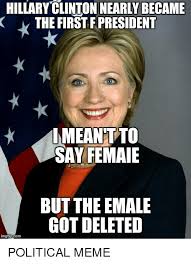

Memes have become the glue that holds Instagram and Twitter together. Memes allow user creation, user consumption and allow the public to share their mind for the world to see. While user generated content is great for the freedom of speech and expression, it does have its flaws. Political memes, while they provide humor and information to the uninformed public, they also provide potentially inaccurate information to those who don’t know better. As stated in The Guardian, “the power of mass replication has poisoned the US election.” This has been seen more than ever with the relatively high disproval of all major political candidates and current internet climate of virality. With 2016 being the most memed election to date, and the further increase in internet activity since that time, it can only be imagined what will happen as this November’s election comes closer. Political discussion is a good thing, as it allows all opinions to be heard and considered, but in scenarios like this, the information that is being portrayed to the public is far from the best truth. As can be seen by the above memes, political memes often target a negative aspect of the candidate in attempt to dissuade the less informed public from casting their vote in favor of the memed candidate. This is a toxic environment where younger generations are acquiring political information from sources whom have an ulterior motive, and has frankly furthered the divide between the right and left. With highly hyper-criminalized candidates on both sides, it generates a love-hate attitude for candidates and makes moderation very difficult to achieve.
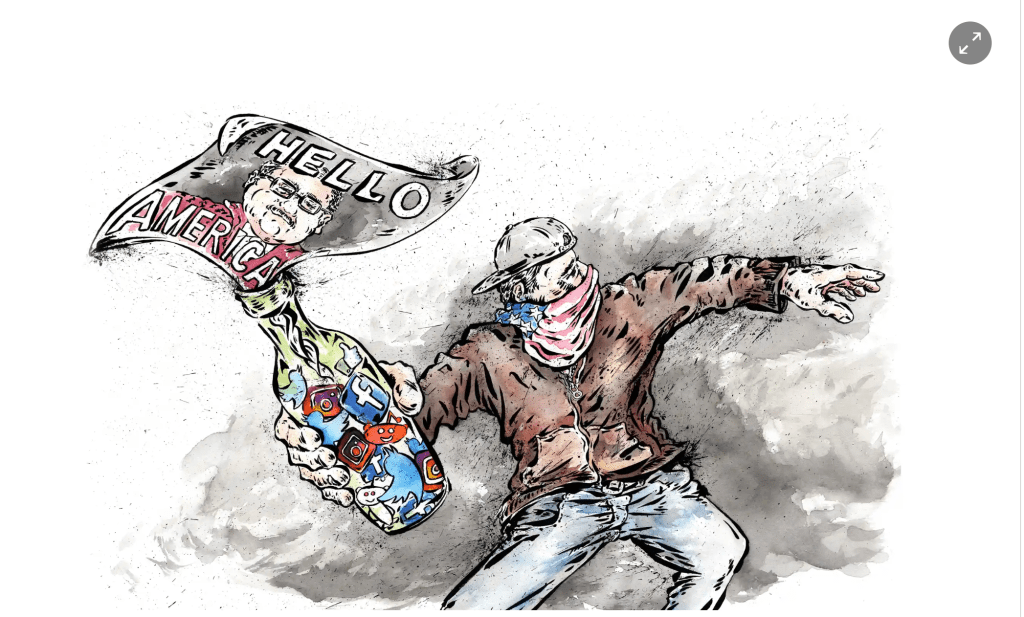
The aforementioned Guardian article goes on to show examples of these flawed political memes, such as Trump’s Taco Bowl, or Ted Cruz being unmasked as the Zodiac Killer. People make memes of these politicians in hopes to find them at their worst. This helps to propagate information to further their own agendas. This has been seen time and time again over the past few years in left wing slander towards President Donald Trump. With today’s age being more technologically active than ever before, it is very easy for uninformed citizens to find their information through political memes on Twitter and form opinions based on a biased political joke rather than fact. I have personally spoken to an elementary school about this topic, for a global politics class at my home University. It is very interesting, but not shocking, to hear that most of the children only knew things about the political candidates that they had seen online, whether that be President Trump’s hair being fake, and Hillary Clinton being in prison.
While this is a common issue among elections and political activism and slander, this also has become a major issue among international conflicts and even nuclear races. According to the New York times, this has become a major issue in the weaponization of tweets and international threats.
This articles includes the example of the recent Indian-Pakistani tensions, and the role of social media and memes in this feud. With tempers at an all time high, and an escalation of aggression, civilians attempt to break the ice by firing humorous slander towards the other nation. While in theory, this is a good way to cool down the tension, the article suggests that the memes rather riled up the opposing side and further heated the conflict. An example that hits closer to home for myself personally is the heightened nuclear race between the United States and North Korea. This was largely publicized and visible via Twitter, as memes were flying off between both sides. The New York times takes this opportunity to target a deeper political discourse of these memes, essentially calling them a coping mechanism. The author suggests that Gen Z has grown up in a political climate where humor is used as a coping mechanism for fear. This is often seen with the United States and Iran, as tensions of a war have been climbing in recent months. From this conflict has given rise to thousands of memes about World War III on apps such as Twitter, Instagram and Tik Tok.
The above Tweet by @haseebasif is just one of many examples of this comedic relief to alleviate the fear of imminent war conditions. It is clear that the current political climate is one that is the most active on social media that the world has ever seen, and is very strongly swayed by information found on social media apps. This WWIII meme has been at the forefront of social media over the last months, and further confirms the New York Times theory of the coping mechanism.
Overall, we live in a world today where most of the population is always plugged in to a smartphone. With that being said, this provides the opportunity and risk for the public to get the wrong source of information if they don’t know better.
Here is my meme 🙂
 Auston Locke's Blog